Science

Healthy Living

The Expanding Universe and the Mystery of Dark Energy

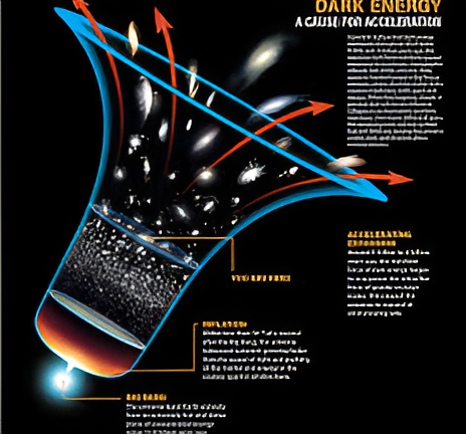
For decades, astronomers believed the universe’s expansion was slowing down due to gravity. However, observations in the late 1990s turned this idea on its head when scientists discovered that the universe is actually expanding at an accelerating rate. This unexpected finding led to the theory of dark energy, a mysterious and invisible force that makes up nearly 68% of the universe. Unlike dark matter, which exerts gravitational pull, dark energy appears to work in the opposite direction, pushing galaxies apart. Scientists have yet to determine the exact nature of dark energy—whether it's a property of space itself, a new kind of dynamic energy field, or something even more exotic. Research continues through projects like the Euclid telescope and the Vera C. Rubin Observatory, both of which aim to uncover the secrets of cosmic acceleration and deepen our understanding of the universe's fate.
Work-Life Balance

CRISPR and the Future of Genetic Engineering

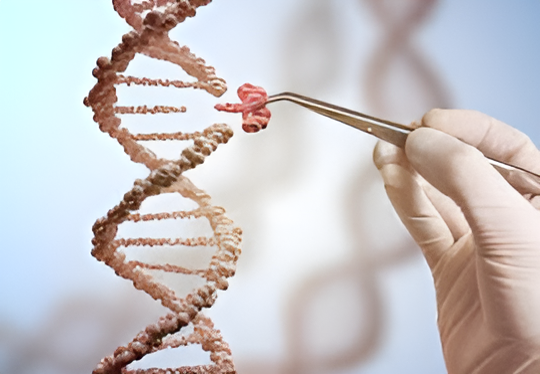
Genetic engineering has entered a revolutionary new phase with the development of CRISPR-Cas9, a powerful tool that allows scientists to edit genes with unprecedented precision. Originally discovered as part of a bacterial immune system, CRISPR enables researchers to "cut and paste" sections of DNA, opening doors to treating genetic disorders such as sickle cell anemia, cystic fibrosis, and even certain forms of cancer. Beyond medicine, CRISPR is being used in agriculture to develop crops that are more resistant to disease, drought, and pests. However, this technology also raises important ethical questions, particularly when it comes to editing human embryos or creating genetically modified organisms (GMOs) that could impact ecosystems. As the field progresses, balancing innovation with responsible regulation will be critical to ensure CRISPR is used for the betterment of humanity and the environment.

Financial Stability

The Role of Artificial Intelligence in Modern Scientific Research

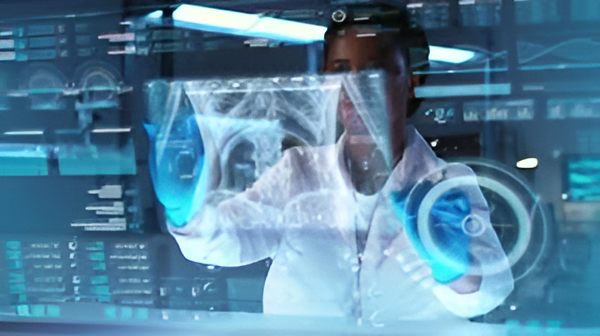
Artificial Intelligence (AI) is rapidly transforming the landscape of scientific research. From automating data analysis to accelerating drug discovery, AI is becoming an indispensable tool across multiple scientific disciplines. In climate science, machine learning algorithms can process vast amounts of environmental data to make more accurate predictions about weather patterns and global warming. In astronomy, AI helps identify celestial bodies in massive datasets collected by space telescopes. Meanwhile, in healthcare, it aids in early diagnosis by recognizing patterns in medical images far faster than humans can. However, the rise of AI also brings challenges, including the risk of algorithmic bias and the need for transparency in AI decision-making. As AI continues to evolve, collaboration between computer scientists and domain experts will be essential to harness its full potential while maintaining scientific rigor and ethical integrity.

Social Connections

Quantum Computing: The Next Technological Frontier

Quantum computing represents a paradigm shift in how we process information. Unlike classical computers that use bits as binary 0s and 1s, quantum computers use qubits, which can exist in multiple states simultaneously due to a phenomenon called superposition. This, combined with entanglement and quantum interference, allows quantum computers to solve certain problems exponentially faster than classical ones. Potential applications include simulating complex chemical reactions, optimizing logistics and supply chains, and breaking modern encryption—posing both opportunities and threats. Companies like IBM, Google, and startups such as Rigetti are racing to build more powerful and stable quantum systems, though challenges like qubit decoherence and error correction remain significant hurdles. As we stand at the edge of this technological revolution, quantum computing could reshape industries and scientific research in ways we’re only beginning to imagine.

Share Your Story